Welcome to 2026 the 10th International Conference on Big Data and Internet of Things (BDIOT2026)
 ∷
∷

∷
 ∷
∷
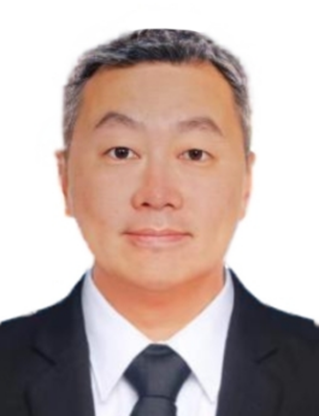
Biosketch: Simon James Fong graduated from La Trobe University in Australia with a First Class Honours BEng degree in Computer Systems and a PhD in Computer Science in 1993 and 1998, respectively. He is currently an Associate Professor in the Department of Computer Science at the University of Macau and a Senior Visiting Scholar at Tsinghua University, Beijing. Prior to joining the University of Macau, he served as an Assistant Professor in the School of Computer Engineering at Nanyang Technological University, Singapore. Dr. Fong has published over 500 peer‑reviewed papers, including top‑tier works in ICDM, ICML, KDD, WWW, ACM MM, MICCAI and other flagship venues in medical analytics and AI. He has been recognized in the Stanford Top 2% Scientists global ranking and has served as a Golden Reviewer for ICML, reflecting his standing in the machine learning research community. He actively serves as a member for IEEE and as Editor‑in‑Chief of the Medical Data Mining journal.
Speech Title: Privacy-Preserving Federated Medical AI: From Local Data to Global Intelligence
Abstract: This talk presents a privacy-preserving federated medical AI framework designed for cross-institutional and cross-regional collaboration without requiring sensitive patient data to leave their local sites. Instead of transferring raw medical images and records, the framework supports local feature learning, synthetic data generation, and incremental model adaptation, while exchanging only controlled model knowledge or meta-features across the federated network. This enables AI models to continue learning from new clinical environments while reducing privacy and data-governance risks. The framework further integrates explainable AI and Legal XAI to provide interpretable evidence, compliance guidance, warnings, and auditable records, helping constrain unreliable AI-generated recommendations and support safer clinical use. Through applications in medical diagnosis, health monitoring, and AI-assisted drug discovery, the talk explores how federated learning can enable international collaboration—including deployment with European partners—under the principle of sharing intelligence rather than sharing private data.